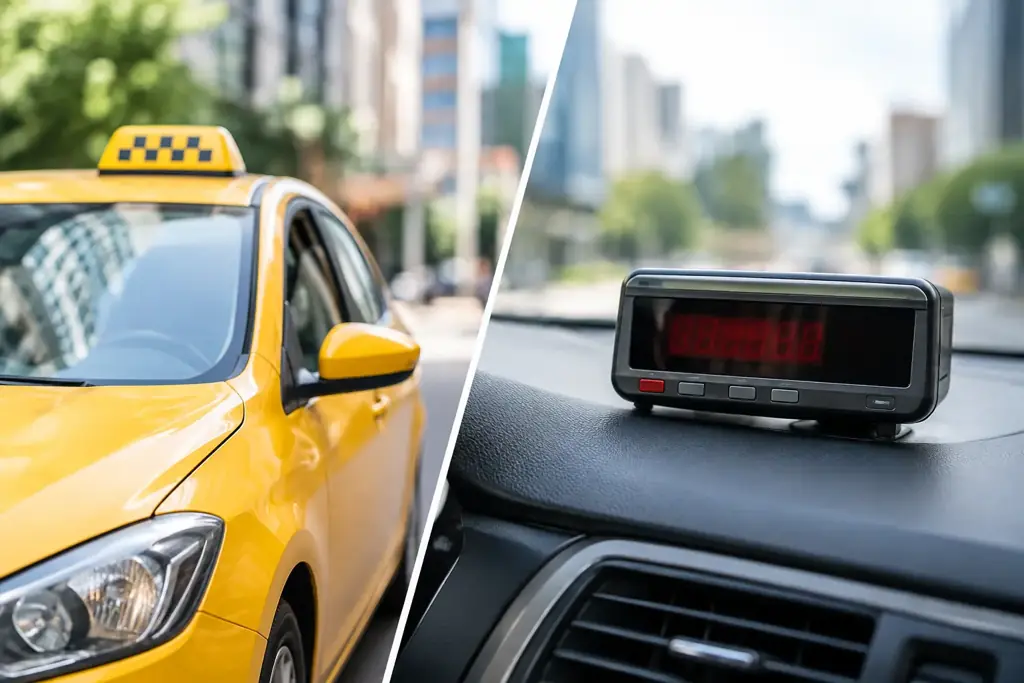
A taxi meter can feel like a small detail until you land late, travel with children and luggage, or need to reach a meeting at a fixed time. The choice between a fixed fare versus metered taxi affects more than the final price. It changes how predictable your trip feels before you get in the vehicle.
For a quick ride across a familiar city, a metered taxi may be perfectly reasonable. For an airport pickup, a transfer to another city, or a journey where timing matters, agreeing on the price in advance often removes the most common travel worries. The better option depends on the trip, the conditions, and how much certainty matters to you.
What a fixed fare means
A fixed fare is a price agreed when you book the ride. It is usually based on the route, vehicle type, passenger count, and any requested extras. You know what the trip will cost before the driver arrives, rather than watching a meter increase in traffic.
This model works especially well for pre-booked airport transfers and intercity travel. If you are traveling from Tallinn Airport to a hotel, heading from Tallinn to Tartu, or arranging a cross-border journey to Riga or Vilnius, the route is known in advance. A clear price makes planning simpler, particularly when you are managing a travel budget or submitting expenses after a business trip.
Fixed pricing does not mean travelers should skip the details. Before confirming, check what the fare covers. A professional transfer provider should make it clear whether airport waiting time, meet-and-greet service, luggage, child seats, additional stops, or late-night pickup times affect the price. Clear terms are what make a fixed fare genuinely reassuring rather than merely attractive at first glance.
How metered taxis calculate the fare
A metered taxi calculates the final charge as the journey happens. The meter typically starts with a base fare and rises according to distance and time. When traffic slows, the time portion of the fare becomes more significant. Different operators may also apply charges for booking, airport pickup, luggage, or certain hours.
For short, spontaneous trips, a meter has a practical advantage: you only pay for the route actually driven. If roads are clear and the destination is nearby, the final cost can be lower than a pre-set transfer price. This can make a metered taxi a sensible choice when you are already in town, have no strict schedule, and can easily choose another vehicle if the price or service does not feel right.
The uncertainty is the trade-off. You may not know the exact fare until arrival, and it can be difficult to compare options when you are tired after a flight or unfamiliar with local pricing. Delays caused by congestion, roadworks, weather, or a longer route can affect what you pay even though they were not part of your original plan.
Fixed fare versus metered taxi for airport arrivals
Airport travel is where the difference is usually easiest to see. After landing, travelers want to know who is meeting them, where to go, and whether there is enough room for everyone and their bags. A pre-booked fixed-fare transfer addresses those questions before departure.
With a fixed fare, your pickup can be coordinated around your flight details and requested arrival time. There is no need to join an airport taxi line and no need to calculate whether heavy traffic will change the trip cost. This is valuable for first-time visitors, families, travelers arriving late at night, and business guests who need to reach the city center without delay.
A metered airport taxi can still be convenient if you have just one passenger, light luggage, and no need to prearrange a ride. But it leaves more decisions until arrival. Availability can vary at busy times, vehicle size may not suit your group, and the final cost is not confirmed at the moment you make your travel plans.
Delayed flights and waiting time
Flight delays are a useful test of the service behind the price. A low fare is less helpful if the driver cannot adapt when your arrival changes. For any airport transfer, ask how flight delays are handled and how long the driver will wait.
Reputable pre-booked services track or confirm flight arrival details and explain their waiting policy in advance. That gives you a point of contact and a clear plan if baggage collection takes longer than expected. With a taxi rank, the vehicle is available when you reach it, but there is no assigned driver or prearranged assistance.
When fixed pricing is the better choice
Fixed pricing is usually the stronger option when the route is longer, the schedule is firm, or several people are traveling together. The price is agreed before the trip, so a slow section of road does not turn into an unwelcome surprise.
It also makes sense when vehicle requirements matter. A couple with two suitcases may need a standard sedan, while a family with a stroller or a group traveling with sports equipment may require a larger vehicle. Booking ahead allows the provider to assign the right vehicle class instead of hoping one is available at the curb.
Business travel is another clear example. A fixed transfer fare is easier to approve, document, and expense. More importantly, a confirmed pickup supports a schedule. When a meeting, conference, or onward train leaves at a specific time, transport should not be the uncertain part of the day.
For intercity and Baltic travel, the value of a fixed fare goes beyond the number on the invoice. The driver, vehicle, pickup time, route, and destination are arranged as one service. That is very different from starting a meter for a journey that may last several hours or cross a border.
When a metered taxi can make sense
A metered taxi is not automatically the wrong choice. It can be a good fit for an immediate, short trip in light traffic, particularly when you know the area and do not need a specific vehicle. If your plans are flexible and a taxi is waiting nearby, the convenience of leaving straight away may outweigh the benefit of advance booking.
It can also be useful when the destination is uncertain. Perhaps you are moving between several nearby locations and do not know exactly where you will finish. In that case, a meter reflects the actual ride more naturally than trying to build a fixed quote around a route that may change.
The key is transparency. Before the trip begins, confirm that the meter is operating, ask about the fare structure, and clarify any possible supplements. If you are concerned about the expected cost, request an estimate, while remembering that it is not a guarantee.
Price is only one part of the decision
Comparing a fixed fare with a meter only by looking for the lowest possible number can miss the real cost of uncertainty. A delayed pickup, an unsuitable car, a long wait in bad weather, or confusion over the final charge can affect the experience far more than a small difference in fare.
For travelers with time to spare, a short metered ride may offer enough value. For travelers who need a driver at a specific time and place, fixed pricing offers a useful form of control. You can choose the vehicle, provide your flight or pickup details, and leave the transport question settled before the day begins.
This is why fixed fares are often preferred for airport service. They combine a known price with a planned pickup, which is exactly what most travelers need after a long flight. A service such as IMS TRANSFER can also match the vehicle to your party and route, helping avoid last-minute compromises around luggage space or passenger comfort.
Questions to ask before you book
Whether you choose a fixed transfer or a metered taxi, ask a few practical questions before committing. Is the quoted price final? What happens if your flight is delayed? Is the vehicle appropriate for the number of passengers and bags? Can you pay by your preferred method? And if the journey is long, are rest stops or additional pickup points possible?
The answers tell you more about the service than the headline fare alone. A clear response signals that the provider understands the journey is not just a ride from one address to another. It is part of your arrival, your schedule, and your peace of mind.
For a quick local trip, a metered taxi may be all you need. For an airport pickup, a family journey, or a fixed-time trip between cities, choosing a transparent fixed fare lets you step into the vehicle knowing the important details are already handled.